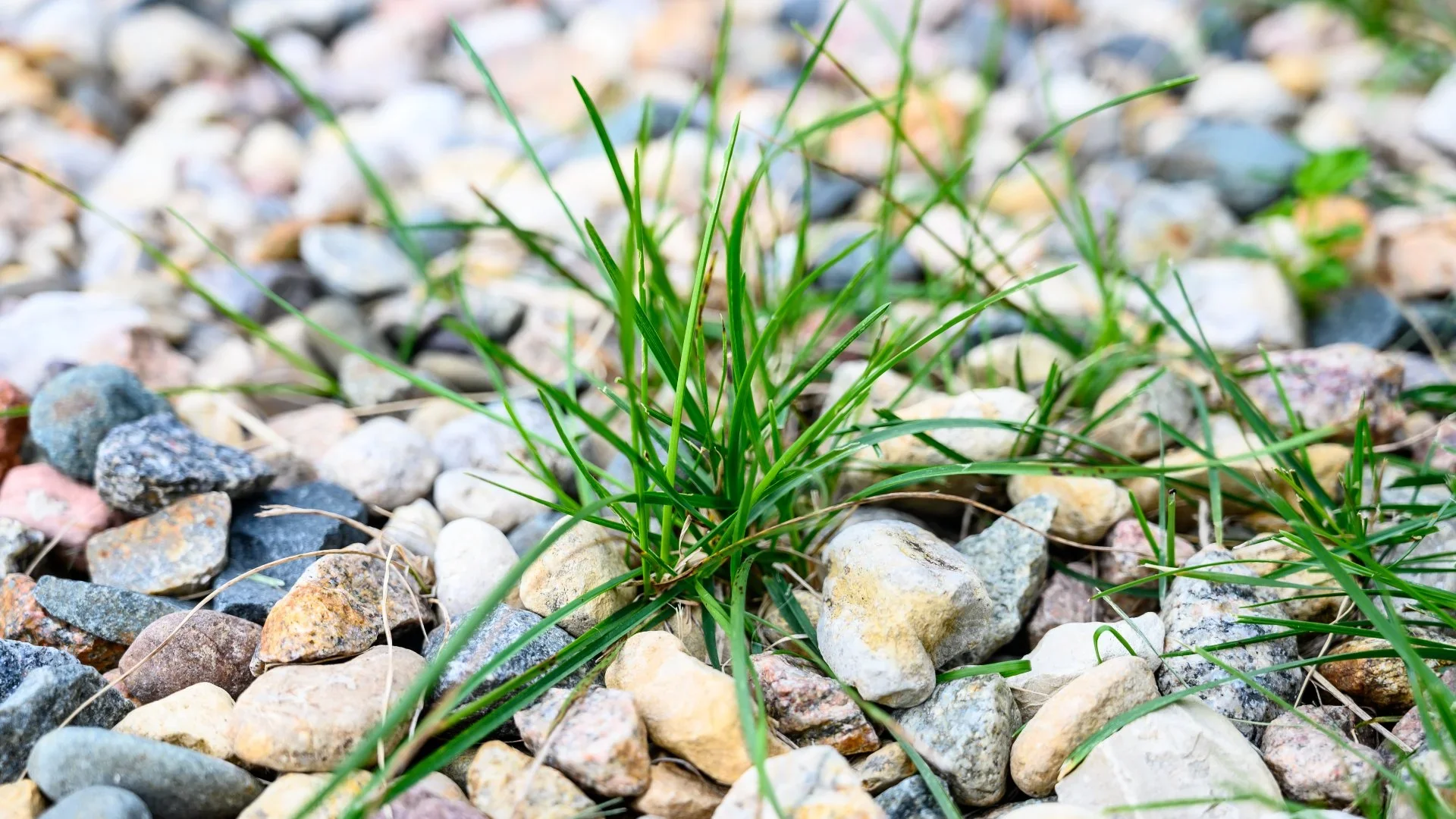
Rock landscapes along desert edges and driveway transitions are popular in Grand Junction because they reduce turf where grass struggles anyway. By late May, wind-blown soil and last season’s seed bank start showing green threads between stones just as homeowners shift attention to the front lawn. Those weeds become harder to control after June heat locks moisture out of the top layer. Mesa Turf Masters has provided rock weed control across Western Colorado since 1992, and early work on desert edges costs less than reclaiming a rock bed in August.
Rock weed control is not one spray and done. It is pre-emergent barriers where appropriate, post-emergent treatment on what has already sprouted, and follow-up through the season.
## Why desert edges weed first
Open rock against native soil and hard soil pockets collects dust from roads, fields, and your own mulch deliveries. That thin soil layer is enough for tumble mustard, kochia, and annual grasses that love heat. Edges near Fruita open desert and Loma lots see more wind deposit than sheltered yards in Redlands.
Weeds also enter through gaps where plastic or fabric barrier failed years ago. If rock depth is thin over weed fabric with sun degradation, expect sprouts along the seams before the center of the bed looks bad.
## Pre-emergent timing on rock
Pre-emergent products create a barrier that stops many seeds from establishing roots in the top layer. Timing matters: apply too early and weather breaks the barrier; too late and seeds already have roots. Our weed control programs track Grand Valley seasons for both lawn and rock.
Read Pre-Emergent Weed Control Timing in the Grand Valley for how spring windows connect to rock beds and turf alike. Rock and lawn are different surfaces but share the same regional clock.
## Post-emergent work before heat
Existing weeds in rock need targeted post-emergent treatment with products labeled for your stone and adjacent planting. Overspray onto desired shrubs or fescue strips causes injury that shows up faster in May than in April. Plant trimming and bed cleanup before treatment opens access along edges where weeds hide under branches.
Pair rock work with yard cleanup when winter debris still holds seed along fence lines. Mulch installation in neighboring beds should not bury weed barrier edges that already failed—fix barrier logic before fresh mulch hides problems.
## Irrigation overspray and weed lines
Sprinkler mist that hits rock keeps dust wet enough for weeds while lawn zones stay starved. Adjust heads at irrigation repairs so throw stays on turf. April Wind and Irrigation Startup in the Grand Valley remains useful when drift onto rock has been happening since startup.
Weed lines along patios often start as overspray and seed together. See Weed Lines Along Patios Before Your First Spring Mow if the same seam bothers both rock and grass.
## New rock and renovations
Rock installation projects should include weed barrier decisions and depth that match how you will maintain the bed. Cheap fabric that tears under foot traffic within two seasons is expensive in labor later. Landscape curbing separates turf from rock so edgers and herbicides have a clear line.
Desert-edge properties in Palisade and Orchard Mesa often combine rock weed control with perimeter pest control because weeds and ants both exploit the same dry transitions.
## Maintenance through summer
Plan at least one mid-season pass on high-wind lots. Late summer moisture germinates a second flush. A maintenance agreement through lawn care can include rock visits so you are not restarting from scratch each spring.
Avoid torching weeds near fabric, irrigation line, and gas meter areas. Mechanical removal works for isolated sprouts if roots are small; established taproots need chemical or repeated control.
Mesa Turf Masters helps Grand Valley homeowners keep rock clean before heat amplifies every sprout. Call (970) 434-5440 or request a quote for rock weed control along desert edges and driveways. Submit photos through #quote if you are unsure whether pre-emergent or post-emergent work comes first.
## Season-long expectations on windy lots
Grand Valley wind redeposits soil in rock beds all summer. A clean edge in May can show new flushes after late July moisture. Maintenance plans that include one follow-up visit before heat peaks and another before fall often cost less than emergency reclamation when weeds go woody against curbing. Ask about bundling rock weed control with perimeter pest control when ants colonize the same dry transitions weeds exploit.
## Coordinate with lawn programs
Weed seed blows from rock into turf and from turf into rock on windy afternoons. Treating only one surface leaves the other as a reservoir. Mesa Turf Masters often schedules weed control on lawn and rock weed control in sequence so barriers and post-emergent work match the same calendar window across your lot.