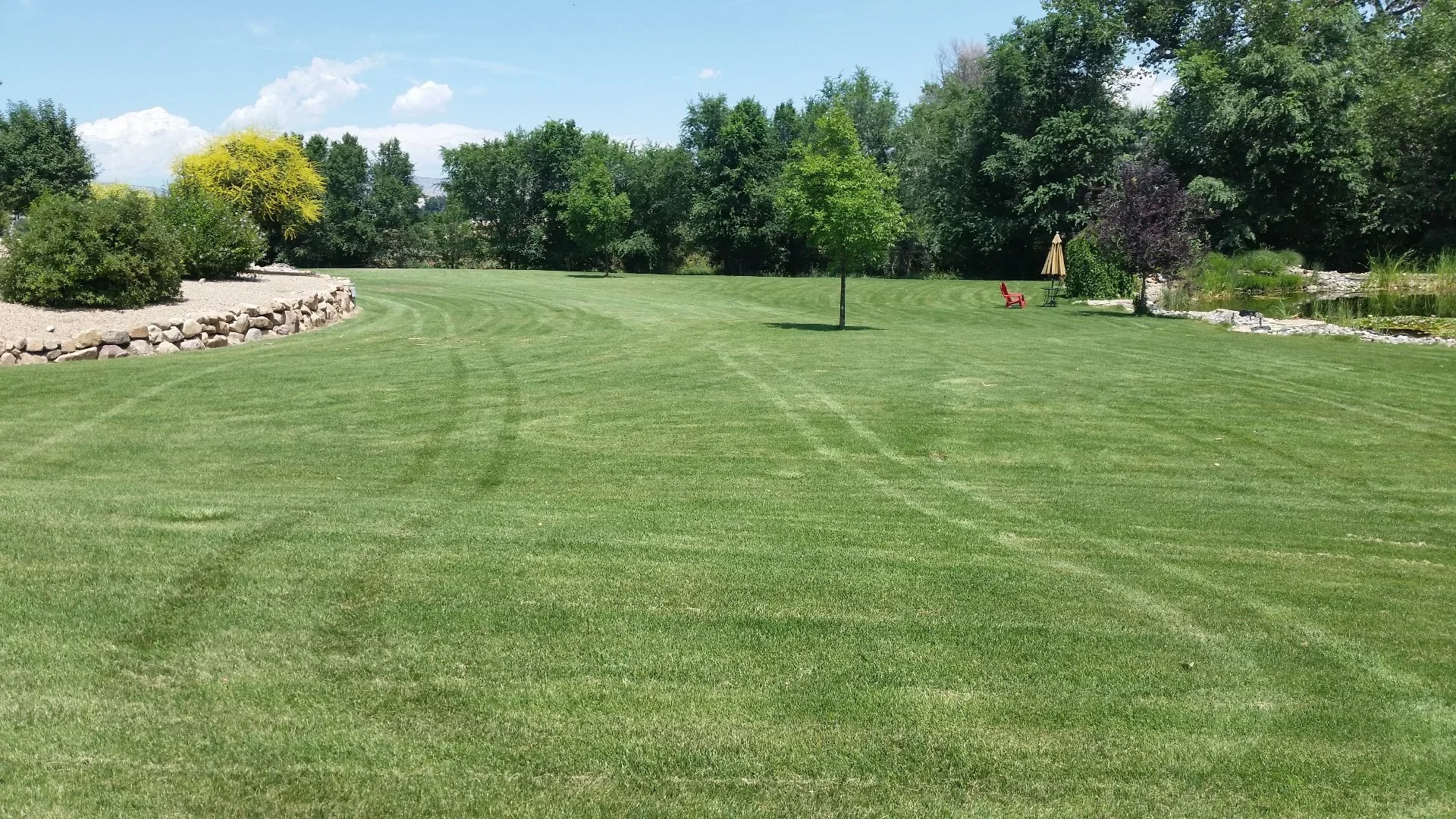
Lawn care services are the routine jobs and targeted fixes that keep your grass alive, usable, and good-looking, and in Grand Junction, that list is usually shorter and more specific than people expect. If your yard looks decent in April but starts crisping up at the edges by July, the problem usually is not that you skipped some fancy add-on. It is that high-desert conditions punish the basics fast.
## What “lawn care services” actually means in grand junction
In plain English, lawn care services are the jobs that help your turf stay healthy and presentable. That usually means mowing, edging, fertilizing, weed control, aeration, irrigation checks, and seasonal cleanup. Sometimes it also includes repair work when part of the lawn is thin, dead, or worn out.
The confusion starts because “lawn care” gets lumped together with landscaping, plant health care, and pest control. Those overlap, but they are not the same thing.
Lawn care is mostly about the grass itself and the systems that keep it going. Landscaping is broader. It can include planting, rock work, mulch, bed design, hardscaping, and the overall look of the property. Plant health care focuses on trees, shrubs, and ornamentals, which matter a lot in Grand Junction because a lawn can look fine while junipers, maples, or foundation shrubs are quietly struggling. Pest control covers insects and nuisance pests around the yard, patios, foundations, and sometimes within the turf.
Here’s the thing: you probably do not need every outdoor service under one giant package. You need the right category for the problem you actually have. A shaggy lawn needs mowing. Thin turf with hard soil needs aeration and feeding. Dead spots near a sprinkler head need irrigation attention before anything else. And a yard with healthy grass but chewed leaves on shrubs has moved into plant health territory.
Once that difference clicks, it gets much easier to sort must-haves from extras.
## Why grand junction lawns need a different game plan
A Grand Junction lawn does not behave like a lawn in a cooler, wetter place. Hot summers, low humidity, alkaline soils, wind, hard-packed ground, and uneven irrigation all change what lawn care services matter most.
That is why generic advice often falls flat. A service list built for a lush, rainy climate can waste money here. In Grand Junction, lawn care is usually less about throwing more products at the yard and more about timing, water, and soil. Miss those, and the rest struggles.
A yard can look pretty good in spring because temperatures are mild and the soil still holds some moisture. Then July shows up, the afternoon sun bakes the west side, a sprinkler head drifts a few feet off target, and suddenly one stretch is straw-colored while the shaded side stays green. Same lawn, different conditions.
### Dry climate, heat, and water limits
Limited moisture changes everything. Grass grows differently when heat is high and water is precious, so mowing, fertilizing, and watering need to work together instead of fighting each other.
Take mowing height. Cutting too short in summer makes the lawn look neat for about five minutes, then it exposes the crown of the grass to more heat and stress. In a dry climate, slightly taller grass usually handles sun better and loses water more slowly. So mowing is not just cosmetic. It changes how the lawn copes with heat.
Fertilizer matters too, but more is not better. Feeding turf that is already heat-stressed or watered poorly can backfire. You get weak growth, more thirst, or a lawn that looks greener for a moment without solving the underlying issue. The better approach is steady, seasonal feeding that matches growth and water availability.
Aeration tends to matter more in places where soil gets hard and water struggles to soak in. If irrigation runs off instead of sinking down, roots stay shallow. Then every hot week hits harder.
The big point is simple: lawn care services in Grand Junction work best when a few basics are done consistently. Not everything, just the right things.
### Soil, sun exposure, and slope
Not every part of your property acts the same. One area may have compacted clay, another may be rocky fill, and another may be shaded by a fence until noon and blasted by sun the rest of the day.
That means not every brown patch is the same problem. A dry strip along a sidewalk may be heat reflection. A soggy spot at the bottom of a slope may be poor drainage or a leaking valve. Thin turf under a tree might be root competition and shade, not fertilizer deficiency.
Compacted soil is especially common in lawns that get foot traffic, mower traffic, or years of irrigation without much soil improvement. When the soil gets tight, air, water, and nutrients have a harder time getting to the roots. Grass starts looking tired even when the schedule seems fine.
Slope changes things too. Water runs downhill. If the upper section dries out fast and the lower section stays soft, that is not random. It is a clue. Good service means reading those clues instead of treating the whole lawn like one flat green carpet.
## The core lawn care services most yards actually need
For most homes and commercial properties in Grand Junction, a short list covers the real needs. Regular mowing, weed and fertilizer treatments, aeration, irrigation checks, and seasonal cleanup do most of the heavy lifting.
Everything else depends on the condition of the yard.
### Mowing and edging
Mowing is the service almost everybody thinks of first, and yes, it matters. But mowing alone does not create a healthy lawn any more than washing a car fixes the engine.
A good mowing service usually includes cutting the grass at an appropriate height, trimming spots the mower misses, edging along walkways or curbs, and blowing clippings off hard surfaces. The result is a cleaner look right away, which is why mowing gets all the attention.
The catch is that mowing height matters more than many people realize. If your lawn gets scalped, especially during hot weather, it loses shade at the soil surface and dries out faster. If it goes too long between cuts, the lawn gets shaggy, clumps form, and stress goes up when too much blade is removed at once.
Edging is mostly about appearance, but appearance matters. Clean lines along a driveway or sidewalk can make a property look maintained even before anybody notices the lawn itself.
### Fertilization and weed control
Fertilization and weed control are often paired because they work best as part of the same plan. Healthy grass fills in better and leaves fewer openings for weeds. Weed pressure, in turn, steals water and nutrients from the grass you actually want.
Pre-emergent is a treatment meant to stop certain weeds before they sprout. Think of it like putting a lid on the problem early. Post-emergent is used after weeds are already up and visible. Different weeds call for different timing, so the right treatment depends on what shows up and when.
In Grand Junction, seasonal feeding tends to work better than random feeding. A lawn that gets the right nutrients at the right times usually colors up better, grows more evenly, and competes more effectively against weeds. But fertilizer is not a magic wand. If irrigation is uneven or the soil is compacted, those issues still need attention.
### Aeration
Core aeration means pulling small plugs out of the soil so air, water, and nutrients can move down to the root zone more easily. It looks a little messy for a short time, but the payoff can be huge.
For compacted Grand Junction lawns, aeration is one of the most useful services you can buy. Full stop.
If your soil feels hard, water pools or runs off, and the turf seems thin despite regular care, aeration often helps more than another round of cosmetic work. It creates space where the lawn has lost it. That makes every other service, especially watering and fertilizing, work better.
Not every lawn needs it on the exact same schedule, but many local properties benefit from periodic aeration because the soil tends to tighten up over time.
### Irrigation checks and adjustments
Bad watering can undo every other lawn care service fast. That is why irrigation checks deserve a place on the core list, not the optional list.
An irrigation check usually includes inspecting sprinkler heads, looking for leaks, checking coverage, adjusting spray direction, testing the timer, and watching for areas that get too much or too little water. Sometimes the issue is obvious, like a broken head spraying the sidewalk. Sometimes it is subtle, like one section getting missed because a nozzle shifted.
If one side of the lawn is green and another side is fading, watering is a prime suspect. Same if water bills jump, runoff starts showing up, or a section feels swampy.
The trick is fixing the system before paying for more treatments. Otherwise, you are pouring time and money into a lawn with one hand while the sprinkler system quietly undoes it with the other.
### Seasonal cleanup
Seasonal cleanup is the kind of service that sounds optional until the property starts looking tired from ten small problems at once.
Spring cleanup usually means removing winter debris, cutting back dead growth, freshening beds, restarting the look of the property, and getting turf and landscape areas ready for active growth. Fall cleanup often includes leaf and debris removal, trimming back spent material, and helping the yard head into colder weather in better shape.
This matters because little messes compound. Dead plant material shades out new growth, debris blocks even watering, and neglected edges make a lawn look rough even when the grass itself is fine. Cleanup resets the property so the rest of the care plan has a fair shot.
## Services you may need depending on your yard
Some services are absolutely worth it, but only when the yard shows signs that call for them. This is where a lot of people overspend. A treatment can be useful and still not belong on your property right now.
### Overseeding or lawn repair
If your lawn is thin, patchy, or worn down, fertilizer alone may not be enough. Grass does not always fill back in just because it gets fed.
Overseeding adds new seed to existing turf to thicken weak areas. Lawn repair may also involve loosening soil, improving coverage, adjusting watering, or fixing the reason the area failed in the first place. This can help with traffic damage, pet spots, dry patches caused by irrigation problems, or sections that never really recovered from stress.
If the lawn has living grass with room to improve, repair and seeding can make sense. If the area is fully dead or the underlying conditions are still wrong, seed alone often disappoints.
### Sod installation or partial replacement
Sometimes starting fresh is faster and cheaper than trying to nurse dead turf back to life. That is where sod comes in.
Partial replacement works well when a few sections are gone for clear reasons, like sprinkler failure, construction damage, pet wear, or a burned-out strip by the curb. Full sod installation makes more sense when the lawn is broadly failing, the layout is being redone, or the existing turf is too far gone to justify piecemeal repair.
Think of it like patching drywall versus replacing a wall section. A small fix is great when the structure is sound. If the damage is widespread, patching every square foot gets old fast.
### Dethatching
Thatch is the built-up layer of dead stems, roots, and organic material sitting near the soil surface. A little bit is normal. Too much can block water and nutrients from moving where they need to go.
Dethatching removes that excess layer. It can help, but it is not an automatic annual service. That is the part people miss.
If your lawn does not have a serious thatch buildup, dethatching may do more disruption than good. It makes sense when the layer gets too thick and starts interfering with lawn health. Otherwise, it is just another line item.
### Tree and shrub care
A nice lawn can still leave the property looking rough if shrubs are stressed or trees are overgrown. In many yards, those plants frame the entire look of the space.
Tree and shrub care may include trimming, shaping, deep-root feeding, disease checks, insect treatment, and general plant health support. In Grand Junction, woody plants often deal with the same stress pattern as turf: heat, dry air, alkaline soil, and inconsistent watering.
If a lawn looks good but the foundation plants are yellowing, thinning, or half-dead on one side, you do not have a lawn problem. You have a plant care problem. Different service, different fix.
### Mulch, beds, and basic landscape maintenance
Not every property needs design work, but many need basic bed maintenance. That usually means cleaning up landscape beds, controlling weeds in non-turf areas, refreshing mulch, and doing light pruning.
This is especially useful if your goal is a property that looks fully cared for rather than a lawn floating in a sea of messy planting areas. Mulch helps hold moisture, suppress weeds, and sharpen up the appearance of beds. Fresh edges and trimmed plantings do a lot of visual work.
For commercial properties, this often matters as much as the lawn itself because entrances, walkways, and parking lot beds are what people see first.
## When pest control becomes part of lawn care
Some lawn problems are not really mowing problems or fertilizer problems. They are pest or plant health problems showing up in the yard. This is where service categories start to overlap.
### Lawn-damaging insects
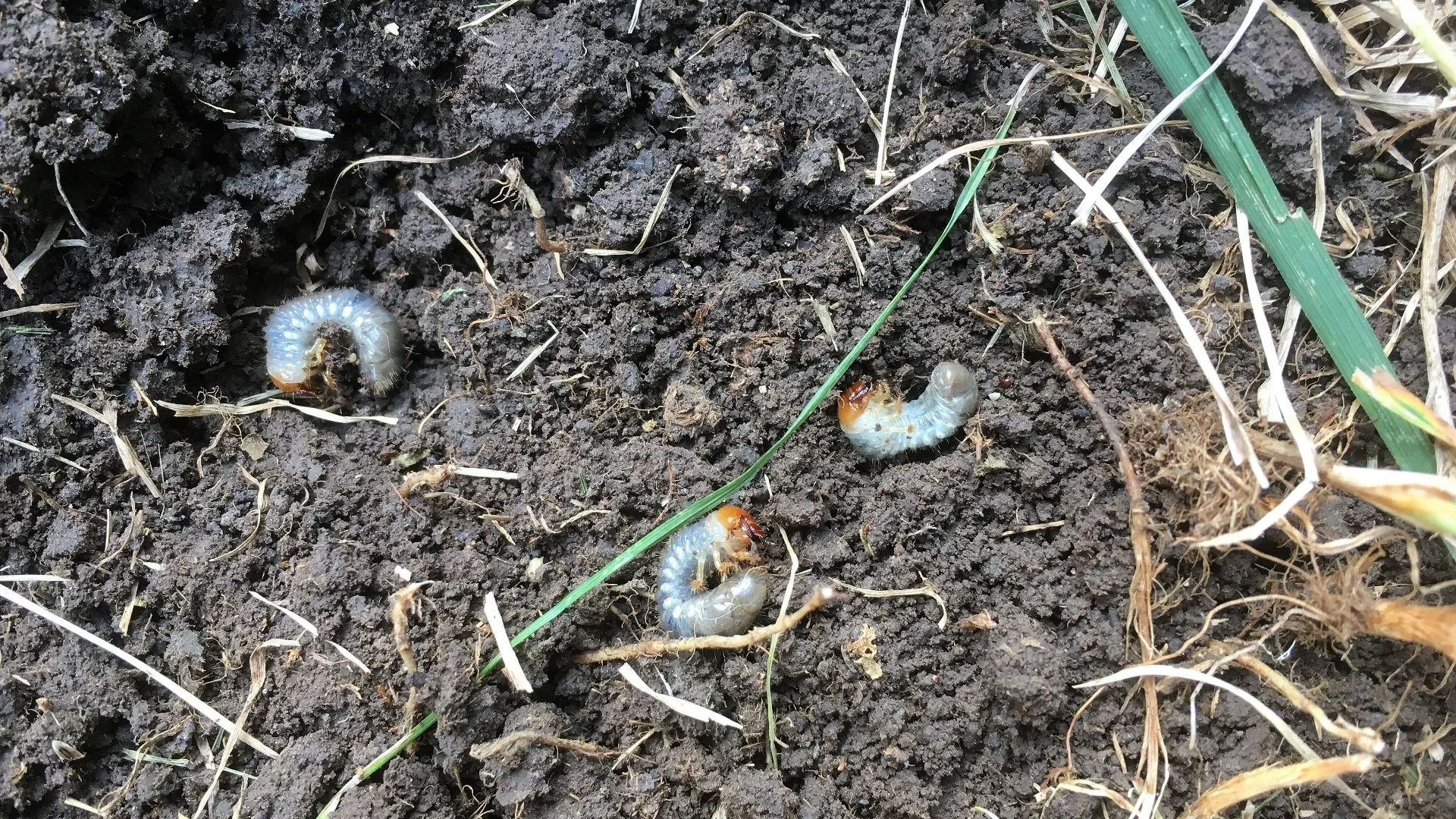
Insects that damage turf can show up as thinning grass, irregular dead patches, weak areas that do not respond to watering, or heavy bird activity in one part of the lawn. Birds pecking aggressively at the turf can be a clue that something edible is going on below the surface.
The key is not forcing a diagnosis from one symptom. Dead patches can also come from heat stress, irrigation gaps, soil compaction, or disease. Still, if the lawn is declining in odd patterns and basic care is in place, insect pressure belongs on the list of suspects.
Targeted treatment makes sense when there is evidence for it. Blind treatment usually does not.
### Perimeter and outdoor pest issues
Ants, spiders, wasps, and nuisance pests around patios, foundations, fences, and yard edges fall into a different bucket than mowing, but many full-service companies handle both.
This matters because outdoor pest issues often affect how usable the property feels. A lawn can be trimmed beautifully, but if the patio is ringed with ants or wasps keep showing up near the entry, the yard is not really working for you.
Perimeter pest service is about comfort and prevention more than turf health. Useful, yes. But separate from the lawn itself.
### Plant disease and stress problems
Yellowing leaves, spotting, dieback, or sudden decline in shrubs and trees can come from disease, watering issues, root problems, or poor soil conditions. Grass can show similar symptoms.
The mistake is spraying something and hoping for the best. If the cause is bad irrigation or heat stress, a treatment aimed at disease will not solve much. If the cause is an actual disease issue, more water may make it worse.
Matching treatment to cause is the whole game here. Symptoms matter, but context matters more.
## The services most people can skip, at least for now
You do not need every possible service to have a healthy property. In fact, paying for too much too soon is one of the easiest ways to waste money.
### Premium add-ons that mostly change looks
Some services mostly improve appearance rather than lawn health. Frequent touch-up visits, extra bed detailing, cosmetic refreshes, and high-frequency trimming can make a property look sharper, but they do not fix watering issues, compaction, weeds, or weak roots.
If your budget is limited, spend on the basics first. A healthy lawn with simple upkeep looks better than a struggling lawn surrounded by expensive polish.
### Treatments that only make sense for specific problems
Dethatching, seeding, disease treatment, insect treatment, and sod work can all be smart. But none of them belong on every quote by default.
A yard with dense healthy turf probably does not need overseeding. A lawn with no insect signs does not need insect treatment just because it exists. A property with mild thatch does not need aggressive dethatching.
The useful rule is simple: pay for these only when the symptoms point there.
## A simple way to figure out what your property needs
Sorting out lawn care services is a lot like sorting laundry before a wash cycle. You do not throw everything in on the hottest setting and hope for the best. You separate by type first.
Start by deciding what kind of problem you actually have: appearance, lawn health, watering, or whole-property management.
### If your main problem is appearance
If your lawn mostly looks shaggy, messy, or uneven, but the grass itself is reasonably healthy, start with mowing, edging, cleanup, and maybe bed maintenance.
This is the simplest category. The goal is presentation. Overgrown edges, missed trimming, debris, and messy beds make a property look neglected fast. Fixing those can change the whole feel of the yard in one visit.
### If your main problem is lawn health
If the grass is thin, weak in color, patchy, or full of weeds, the likely needs shift toward fertilization, weed control, aeration, and irrigation review. If sections are bare or worn out, repair work may need to join the list.
This is where people often keep paying for mowing and wondering why the yard still looks bad. Mowing maintains a lawn. It does not rebuild one.
### If your main problem is watering
If you see dry spots, runoff, swampy zones, or a rising water bill, start with irrigation inspection before almost anything else.
That is the direct move. Fix the coverage, timing, leaks, and alignment first. Then fertilization, repair, or recovery work has a chance to stick. Without that, you are decorating a problem.
### If you manage a commercial property
Commercial properties usually need consistency more than anything. The priorities are reliable mowing, visible curb appeal, safe walkways, working irrigation, seasonal cleanup, and service timing that does not create hassle for customers, tenants, or staff.
A commercial lawn does not need to be pampered like a golf green. It needs to look cared for, stay safe, and avoid the kind of visible decline that makes the whole property feel neglected.
## How often you really need lawn care services
One of the biggest practical questions is frequency. The honest answer is that not every service belongs on a weekly schedule.
### Weekly or biweekly mowing
Mowing frequency depends on growth rate, season, and how polished you want the property to look. During active growth, many lawns need weekly mowing to stay neat and avoid removing too much blade at once. In slower periods, biweekly service may be enough for some properties.
Summer stress can change the approach. If growth slows during heat, the goal becomes less about cutting often and more about avoiding stress.
### Seasonal treatments and tune-ups
Fertilization, weed control, aeration, irrigation adjustments, and cleanup usually happen as seasonal touchpoints rather than constant visits. Spring often brings irrigation startup, pre-emergent weed control, cleanup, and the restart of mowing. Summer shifts attention toward watering performance, mowing height, and stress management. Fall is a common time for aeration, cleanup, and repair work.
Locally, timing matters more than blindly following a generic calendar. A warm early spring or a brutal hot spell can change what the yard needs.
### One-time vs ongoing service
Some jobs make sense as one-time work. A cleanup, sod patch, irrigation repair, or bed refresh can solve a specific problem and be done.
Ongoing service makes more sense when the lawn needs regular mowing, continued weed management, seasonal feeding, or recurring property upkeep. If your schedule is packed or the sprinkler system is finicky, recurring service usually saves more hassle than it costs because small issues get noticed before they turn into large ones.
## What lawn care services usually include in a quote
Quotes can look simple on the surface and still hide big differences. One company’s “lawn service” might mean just mowing. Another might include trimming, edging, cleanup, and visit notes.
### What’s Usually included
A basic lawn care quote often includes mowing, string trimming around obstacles, edging along hard surfaces, and blowing grass off sidewalks, patios, and driveways. Some providers also include light cleanup of loose debris during regular visits.
That is the baseline most people expect when hiring routine service.
### What often costs extra
Extras often include hauling away debris, shrub trimming, fertilizer programs, weed control treatments, irrigation repairs, leaf cleanup, pest treatments, and emergency or off-schedule visits.
This is where comparing quotes gets tricky. A lower bid may only cover cutting grass, while a higher one may include services that actually reduce other problems.
### Questions to ask before you say yes
Before agreeing to service, get clear on what happens and how often. Ask how often visits are scheduled, whether weed control is included, who handles irrigation issues, what happens if part of the lawn declines, and whether cleanup or debris hauling costs extra.
Vague agreements are where frustration starts. Clear scope saves headaches later.
## What lawn care costs depend on in grand junction
Pricing changes for good reasons, and it is usually not random. If one quote comes in higher than another, there is often a workload difference hiding inside it.
### Property size and layout
Larger properties take longer, obviously, but layout matters almost as much as square footage. Tight corners, slopes, fences, gates, narrow side yards, rocky edges, and bed-heavy designs all slow work down.
A wide open lawn is faster to maintain than a yard chopped into five sections by paths, planter beds, and fencing.
### Condition of the lawn and landscape
A maintained property is cheaper to keep maintained than a neglected one is to rescue. If the yard needs catch-up mowing, heavy cleanup, weed control, irrigation fixes, or turf repair before normal maintenance can even begin, the price will reflect that.
That is not upselling. It is labor.
### Service mix and frequency
There is a big difference between mowing-only service and a full package that includes fertilization, weed control, irrigation monitoring, shrub care, seasonal cleanup, and pest management.
Frequency also matters. Weekly visits cost more than biweekly visits because the schedule is tighter and the property gets more attention. But in some cases, more frequent care prevents the bigger repair costs that show up when basic maintenance slips.
## Common mistakes when choosing lawn care services
Most lawn care mistakes are not dramatic. They are ordinary decisions that sound reasonable in the moment and then quietly create mediocre results.
### Paying for mowing while ignoring watering
This is probably the most common one. A lawn gets cut regularly, the edges look sharp, and the grass still declines because the watering is off.
Mowing keeps the lawn tidy. Irrigation keeps it alive. If coverage is uneven, timing is wrong, or leaks are wasting water, a clean cut will not save the turf.
### Treating every brown patch like the same problem
Brown grass is a symptom, not a diagnosis. It can come from heat, pet damage, insects, fungus, compacted soil, or a broken sprinkler pattern.
The catch is that the fix changes completely depending on the cause. More water helps some problems and worsens others. Fertilizer may help weak turf but do nothing for a dry spot caused by bad coverage.
### Buying a full package you Don’t need
Bigger packages sound efficient, but they are not always the smart buy. If your lawn is already thick and healthy, you may not need repair work, disease treatment, or premium detailing.
Match services to the property in front of you, not the biggest menu available.
## The short list: what you probably need first
For many Grand Junction lawns, the best starting point is not complicated: regular mowing, an irrigation check, a fertilization and weed control plan, and aeration if the soil is compacted. That mix covers the problems that show up most often and sets the lawn up to respond well.
After that, add repair work, tree and shrub care, pest control, or bed maintenance only if the yard shows clear signs it needs them. That is the whole idea. Start with what supports health, then layer on what improves the rest of the property.
Try one simple thing first: walk the yard and pay attention to the watering. If the grass is struggling, chances are good that water is either helping everything else work or quietly ruining the results.
* Disclaimer: This article is for general informational purposes only. It is not professional advice, a quote, or a service agreement. Conditions at your home or property may differ; contact a qualified professional for an on-site evaluation before making repair, safety, or spending decisions.
* Disclaimer: This article is for general informational purposes only. It is not professional advice, a quote, or a service agreement. Conditions at your home or property may differ; contact a qualified professional for an on-site evaluation before making repair, safety, or spending decisions.