The ribbon of grass between the driveway and the sidewalk is one of the hardest places to keep pretty in the Grand Valley. It gets salted in winter, baked in summer, and stepped on all year. You can treat the main lawn like a carpet and still see a weak strip along the concrete where grass never looks as full as the rest.
Mesa Turf Masters helps property owners in Grand Junction, Fruita, and Palisade with lawn renovation, overseeding, aeration, and ongoing lawn care so problem strips get the same expert eye as the open yard.
Why Concrete Edges Stress Grass
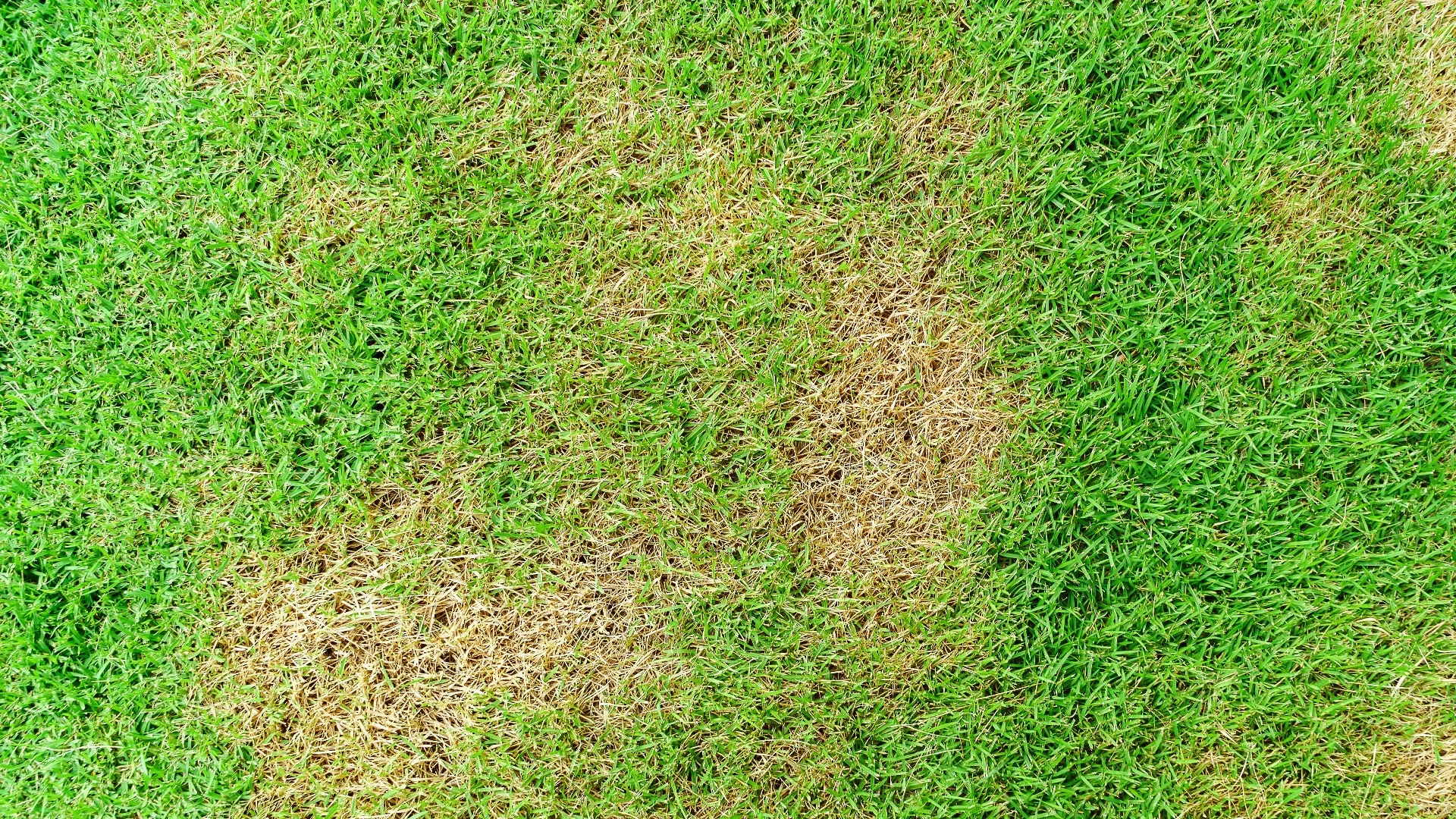
Salt and melt products splash or drain into soil along walks and drives. Even careful shoveling often scrapes crowns and roots. Heat radiates from concrete, so that strip dries faster than the middle of the lawn. Foot traffic from mail carriers, guests, and pets follows the same path. Together those factors compact soil and wear out grass.
In Orchard Mesa and Fruitvale, lots of homes have long runs of sidewalk next to turf, so the weak line is impossible to miss. Corners where plows stack snow melt longest are often the first places to go thin in spring.
Start With Soil and Grade
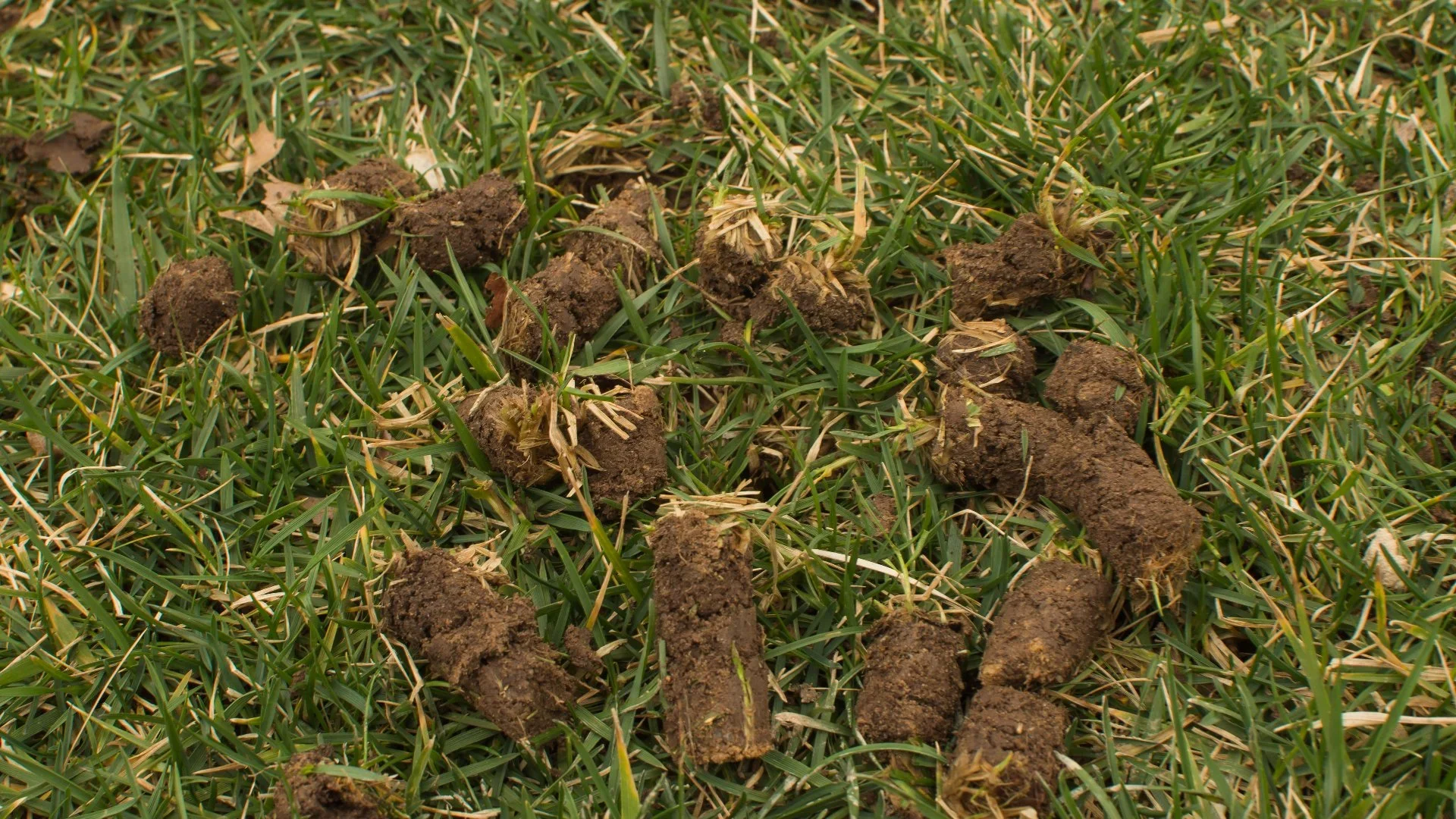
Before you throw more seed at the problem, check compaction. If a screwdriver is hard to push six inches down, water and roots are not moving freely. Core aeration opens channels so air and water reach deeper. If the strip sits lower than the concrete and holds puddles, a small grade fix or drainage check may be needed before you invest in new grass. Our irrigation repairs crew often finds a head that pounds one corner of a strip while another corner goes dry; balancing that pattern matters more on a narrow band than in a wide backyard.
Spring is a smart time to review your full watering picture. Our post on when to turn on and turn off your sprinklers in Western Colorado helps you match run times to the season so you are not drowning one strip while another bakes.
Pick Seed and Care That Fit the Spot
Refer to best grass types for Grand Valley lawns for the big picture. For hot, salty edges, tall fescue in a mix often holds up better than tender types that demand perfect moisture. You still need realistic mowing: keep the height on the upper side of what you use in the main lawn so blades shade soil along the hot edge.
- Reduce salt contact where you can with careful application and gentle removal in spring.
- Flush the soil with a deep watering cycle once weather warms if salt buildup is suspected, only where drainage allows.
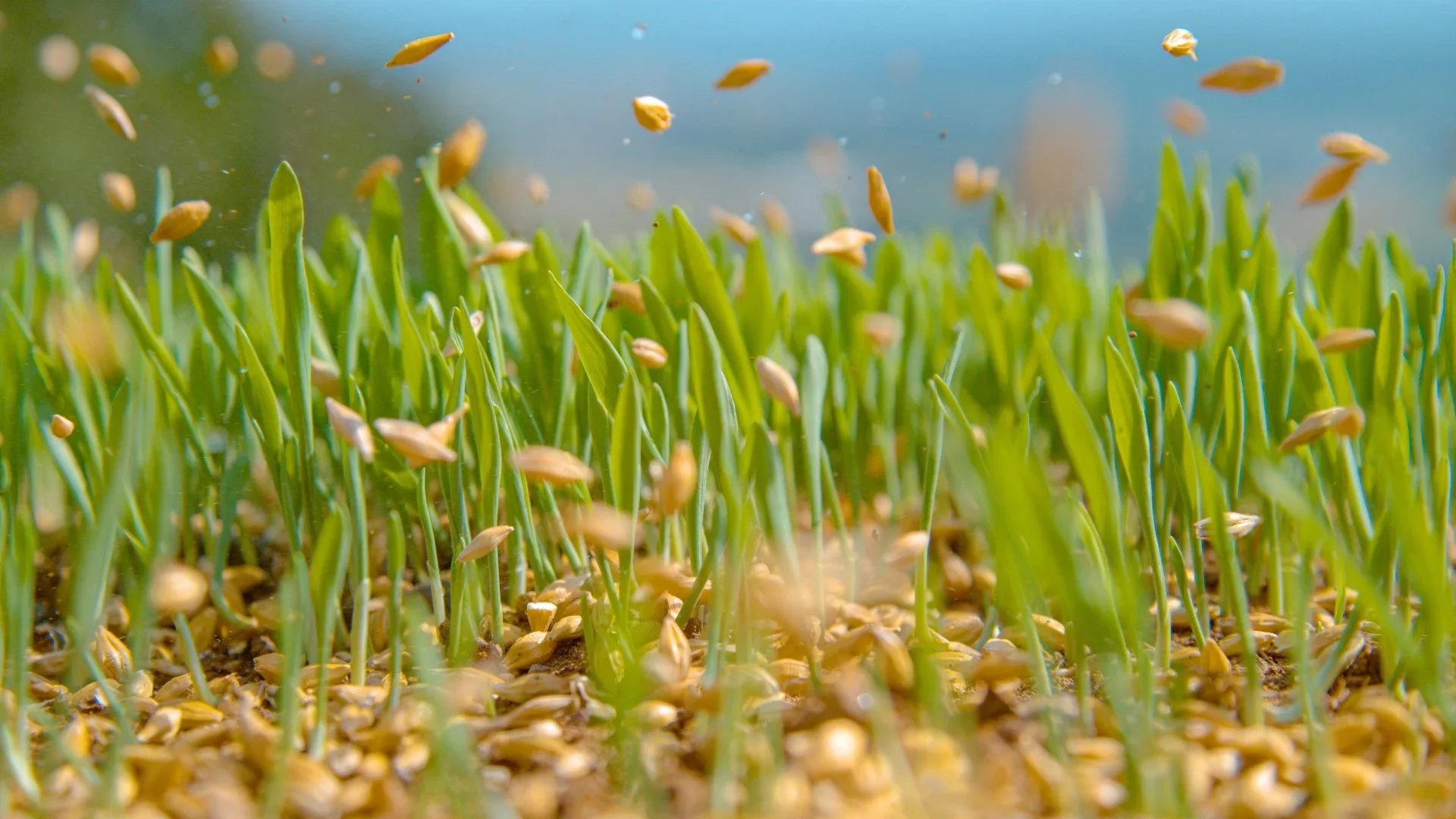
- Overseed in fall or spring when you can follow with steady light watering; avoid the peak heat of midsummer for new seed on concrete edges.
- Wait until grass is actively growing before the first cut along hot strips; our guide on your first mow of the year in Grand Junction explains height and timing so you do not scalp recovering turf.
Link the Strip to the Whole Lawn Program
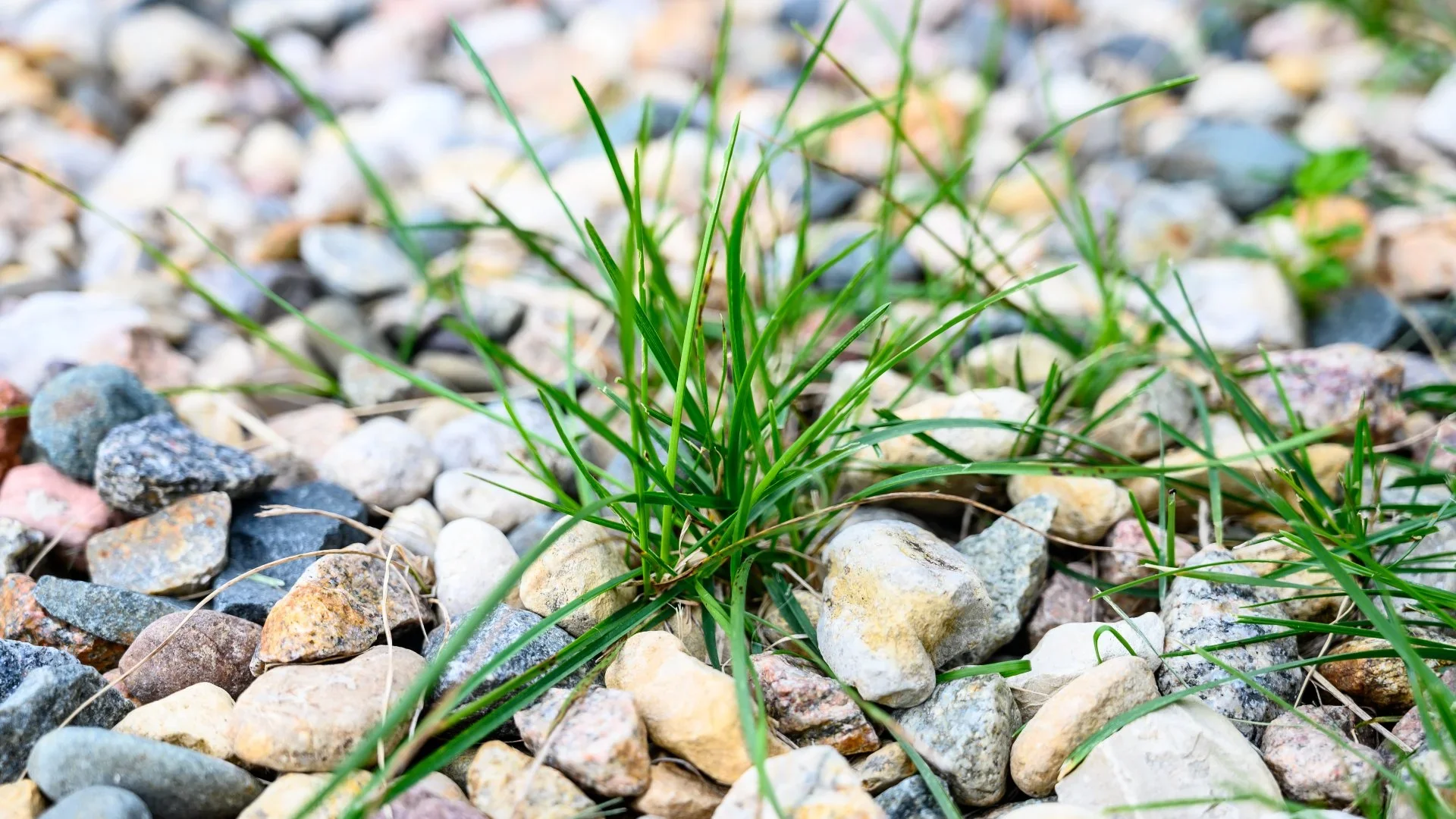
A skinny strip rarely thrives if the rest of the lawn is starving. Fertilization and weed control on a schedule keep neighboring grass strong so you are not fighting weeds that love stressed edges. If the strip is too narrow for healthy root growth, some homeowners choose rock or mulch with rock installation or mulch installation instead of fighting nature. That can look intentional and cut maintenance if the space is under two feet wide.
If you keep grass in that space, treat the strip as part of the same program as the front yard, not as an afterthought. The same weed control visit that blocks crabgrass in the open lawn also protects those edges if coverage is even.
When to Call for Renovation
If the area is more dead than alive, a full reset may save seasons of patchwork. Lawn renovation can include removing weak turf, improving soil, adjusting irrigation, and reseeding or using sod installation where you need an instant edge for curb appeal. Pair renovation with lawn fertilization so new grass enters the season with steady nutrition.
Foot Traffic and Simple Path Fixes
Delivery drivers and daily walks often follow the same line along a walk or drive. If the grass is worn to bare soil, new seed will struggle until you loosen compaction and move some of that traffic. Temporary stepping stones or a short rock path can shift feet while grass gets established. After the strip fills in, you can remove the stones or keep a neat path if that matches how you use the yard. This small change is often the missing piece when everything else looks fine on paper but the edge never holds grass.
Straightforward Goals for Homeowners
- Treat driveway and sidewalk strips as a special zone, not as the same as the center of the lawn.
- Fix compaction, irrigation overlap, and drainage before reseeding.
- Choose grass mixes suited to heat and wear, and mow a little higher.
- Consider rock or mulch for strips too narrow for strong turf.
- Tie the strip into a complete lawn care plan for fertilization and weed control.
For an on site look at weak edges anywhere from Clifton to Montrose, call (970) 434-5440 or request a free quote for lawn renovation, overseeding, or aeration.