
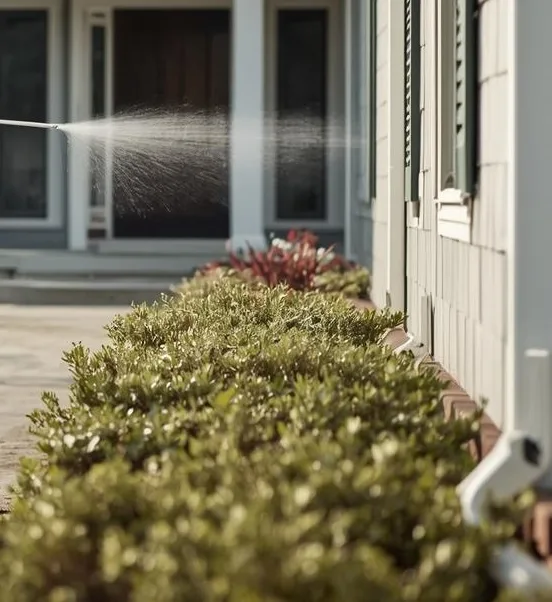
A homeowner can call Mesa Turf Masters for pest control and still have several decisions to make.
We do not offer one generic plan with a different name attached to each billing frequency. We publish separate programs for exterior-only service, year-round interior and exterior work, seasonal interior and exterior service, and mosquito or flying-insect control. Each program covers a different part of the property and uses a different calendar. Details live on our pest control page.
The right starting point is not which package is most popular. It is where the activity is occurring, and how much ongoing monitoring this property needs.
Exterior service keeps the work outside
Our Exterior Pest Control Program runs from March through September with a minimum of five applications. The published scope includes treatment along the foundation and lower entry points, granular bait in selected beds and unwatered lawn areas, removal of accessible spider webbing, wasp-nest work, basic crack-and-crevice exclusion, and follow-up after the initial service.
That program may fit a property where the main goal is reducing activity before pests move indoors. Examples include ant trails around the foundation, spider webbing near doors or exterior lights, wasp activity around eaves, elm seed bugs collecting outside, occasional exterior roach activity, pest pressure around landscape beds, and a homeowner who does not currently need routine indoor treatment.
The program does not turn an interior infestation into an exterior-only problem. Tell us when pests are already appearing in kitchens, bathrooms, storage rooms, utility areas, or other living spaces. The technician may recommend a program that includes indoor inspection and monitoring instead.
Year-round service adds indoor monitoring
Our Interior and Exterior Pest Control Program is available monthly or every other month throughout the year, with at least six visits annually. The published indoor scope includes inspection, monitoring devices in selected rooms, treatment around plumbing and utility penetrations, crack-and-crevice work, basic exclusion, and two Multi-Catch traps for the garage. Monthly service also includes one interior fly light.
This program may make more sense when the house has recurring indoor ant activity, garage pest pressure, storage areas that need monitoring, plumbing penetrations associated with activity, a history of roaches or other indoor pests, pest activity during colder parts of the year, a large or complicated floor plan, previous interior infestations, or a homeowner who wants recurring indoor inspection.
Monitoring devices do not mean the technician expects every room to have an active problem. They create places where activity can be documented between visits rather than relying only on what happens to appear while the technician is present.
The seasonal interior program sits between the first two
Our Seasonal Pest Program runs from March through September with at least five visits. It includes interior and exterior coverage similar to the year-round program but excludes the Multi-Catch garage traps. That structure can fit a home where indoor pest activity is tied mainly to the warmer months. For example, the homeowner may notice insects moving inside as outdoor activity increases but have little reason for recurring winter inspections.
In plain terms, exterior service covers the perimeter from March through September with no routine indoor program. Year-round interior and exterior covers the whole property with monitors and garage traps included. Seasonal interior and exterior covers the whole property from March through September without Multi-Catch traps. Mosquito control covers outdoor vegetation and gathering areas from April through September and is not an indoor general-pest program. The exact recommendation still depends on the inspection and property.
Mosquito service has a different purpose
Our Mosquito Control Program runs from April through September with at least four applications. We use blowers and targeted plant applications to address mosquitoes, gnats, elm seed bugs, and stinging insects in outdoor areas. That program should not be confused with the general exterior perimeter service.
A homeowner may need both when the property has ants and spiders around the house, mosquito activity near a patio, elm seed bugs gathering on exterior surfaces, wasp activity in outdoor-use areas, and a lawn or landscape that supports several different pest concerns. Ask which service addresses each observation. The invoice should not leave you believing that one mosquito application also replaces indoor monitoring, garage traps, or general perimeter work. Related outdoor conditions often connect with lawn care, tree and shrub care, and irrigation.
Service frequency should follow the history
We currently offer monthly, bi-monthly, and seasonal frequencies across our pest programs. Most treatments are designed to provide roughly thirty days of residual activity, although property conditions and the selected program still shape the actual schedule.
A monthly plan may be more appropriate when activity is already established, the property has recurring pressure, indoor monitoring needs closer attention, several pest types are involved, or the homeowner wants more frequent inspection. A bi-monthly plan may fit a property with a more stable history and lower ongoing pressure. The technician should explain why the recommended frequency fits the house instead of presenting another visit as automatically better.
Basic exclusion has limits
Several programs include basic exclusion work around cracks, crevices, and common entry points. That does not necessarily mean the service includes major siding repair, roof work, foundation reconstruction, large carpentry projects, full wildlife exclusion, door or window replacement, extensive crawl-space work, or structural repairs.
When we identify a larger building condition, ask for photographs and a clear description of what falls outside the pest-control scope. You may need another qualified contractor to complete the physical repair while we continue monitoring the pest activity.
Prepare a property history before the estimate
Write down the pest type if known, indoor or outdoor location, time of day, season, rooms affected, garage activity, exterior foundation areas, landscaping nearby, recent construction, water leaks, food or pet-food storage, previous pest company, products already used, and photos or captured specimens where safe.
Avoid spraying or cleaning every area immediately before the technician arrives when the activity can be left safely undisturbed. The evidence may help us determine which program fits.
Ask for the program in plain language
Before enrolling, you should be able to answer whether the program includes indoor service, which months it operates, how many visits are included, which monitoring devices remain onsite, whether garage traps are included, whether the program includes mosquito work, which pests are covered, what exclusion work is included, how follow-up concerns are handled, and what property preparation is required.
Mesa Turf Masters has served the Grand Valley since 1992 and operates from 2253 Colex Drive in Grand Junction. Call (970) 434-5440 or use the contact page when you want help matching a pest program to the way your home is actually used. Related reading stays in the blog.