
Xeric beds along patio walks and driveway skirts share valves with cool-season turf more often than owners admit. Overspray that keeps bluegrass happy can yellow lavender and sand cherry in the same week. Mesa Turf Masters maps the lot before product names appear, because Grand Valley clay, afternoon sun, and shared irrigation zones change the first visit on every property.
## Turf arcs and desert plant leaves do not share goals
Xeric bed species need infrequent deep wetting at root depth while Kentucky bluegrass beside them wants frequent shallow moisture at the crown line. One zone trying to serve both usually satisfies neither within one season.
Overspray shows up as leaf yellowing, stem elongation, or sooty mold on plants that evolved for dry air. The lawn may look fine while bed plants fail beside the same head.
Grand Junction lots with rock mulch and drip on beds but spray on turf are still vulnerable where corner rotors throw past pavement into lavender and ornamental grasses.
## Head type and arc clipping
Adjustable nozzles and deflector shields exist because manufacturer defaults rarely match real bed lines. A five-degree error at the head becomes two feet of wet leaves at the bed front on narrow lots.
Mark bed corners with stakes during a daylight run and watch splash on rock, not only on foliage. Mist that wets decorative boulders still feeds weeds in xeric mulch seams.
Pressure too high on spray heads increases drift onto beds even when arc settings look correct on paper.
## Soil moisture sensors in mixed zones
Soil sensors placed in turf may call for water while bed roots are already saturated from the same event. Mixed zones need sensor placement strategy, not only sensor installation.
Note whether smart controllers skip cycles based on turf moisture while bed plants desiccate on the far side of the same valve. Splitting zones is sometimes cheaper than replacing stressed perennials every spring.
Irrigation audits on western Colorado properties should list bed species beside each head they might wet.
## Plant selection at the collision line
Species planted exactly at turf overlap should tolerate occasional leaf wetting or be set back six to twelve inches from actual spray reach. That setback is boring maintenance work but saves replacement budgets.
When redesign is not immediate, temporary shields or partial arc reduction protect existing xeric stock while long-term valve splits are quoted.
Photos of damaged plants beside a head serial number make retrofit estimates faster than verbal descriptions of which corner rotor is guilty.
## Fertilizer and herbicide drift
Granular fertilizer thrown into beds with turf spreader overlap burns xeric foliage as reliably as irrigation overspray. Parallel tracks matter for chemistry, not only for water.
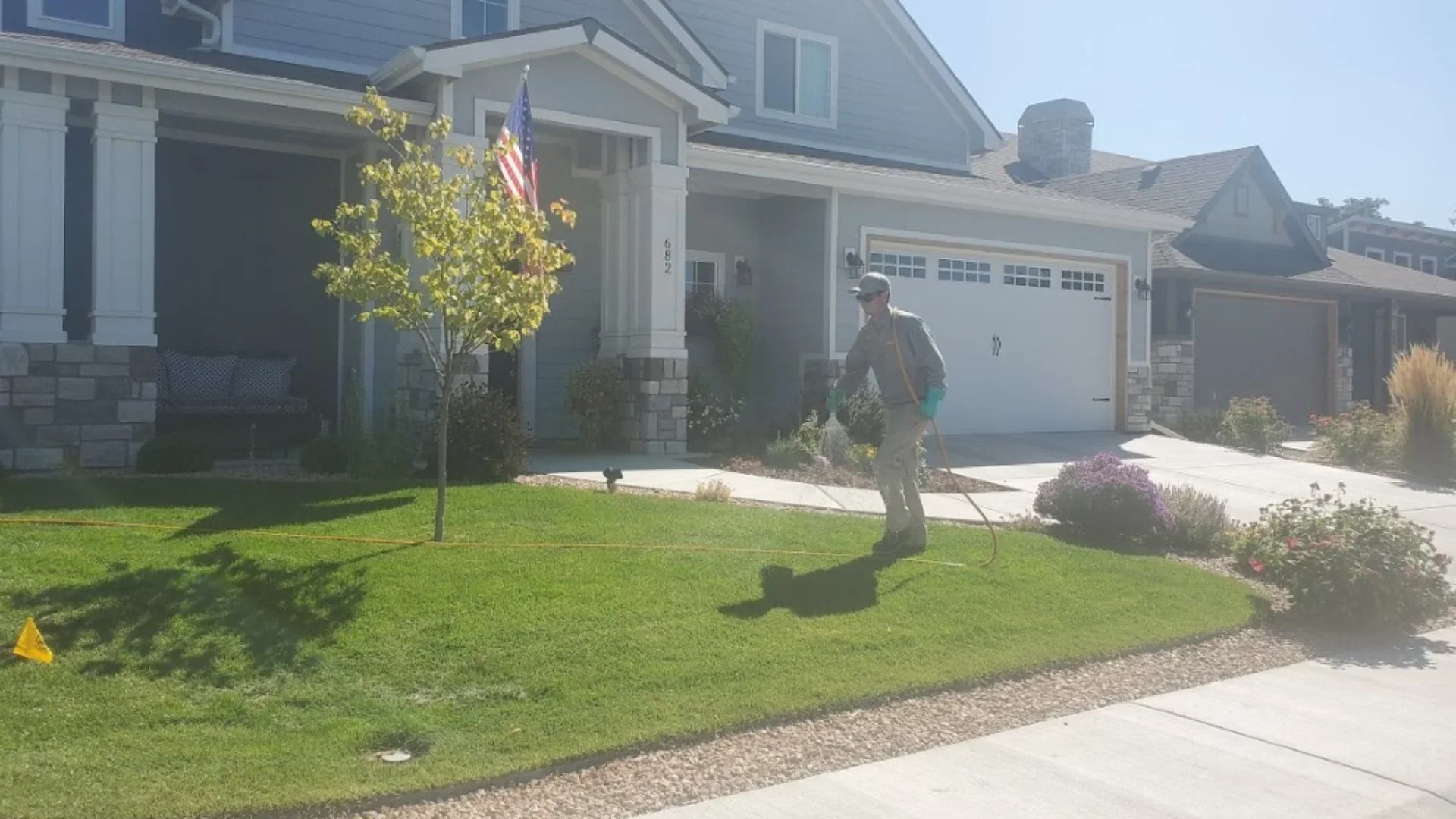
Herbicide vapor and drift from turf weed visits can hit sensitive bed species on hot afternoons. Schedule and wind notes belong on the same property log as irrigation arcs.
Bed mulch that stays damp from spray encourages weed seams that read like irrigation failure when chemistry also crossed the line.
## Property log for mixed zones
List each bed species, head number, and whether leaves showed stress after the last three irrigation days. Xeric damage is repeatable when the log survives one full season.
Mesa Turf Masters uses those logs to recommend valve splits or head changes before owners replace the same sand cherry twice.
Contact with photos of affected leaves and a controller zone list starts the audit without guessing which arc crossed the bed line.
## Retrofit priorities when valve splits wait
Temporary arc shields or nozzle inserts can protect xeric plants while quotes for separate valves move through HOA review. Document which heads received shields so spring startup does not bury the fix.
List plant species that failed twice beside spray arcs. Replacement budgets improve when the log shows chemistry and water both crossed the bed line.
Winter is a good season to measure setback distances for new plantings that must tolerate occasional leaf wetting on Grand Junction clay.
Bed logs that name species, head number, and stress week outperform generic water saver advice on mixed turf and xeric lots.
Send shield photos with valve quotes so installers see the collision line before trenching season opens across the Grand Valley.
* Disclaimer: This article is for general informational purposes only. It is not professional advice, a quote, or a service agreement. Conditions at your home or property may differ; contact a qualified professional for an on-site evaluation before making repair, safety, or spending decisions.