Kentucky bluegrass on west exposures in Grand Junction and Redlands often thins by late summer while the morning shade side still holds color. The loss is usually cumulative heat on shallow roots, not a sudden fungus that arrives overnight. Mesa Turf Masters maps the lot before product names appear, because Grand Valley clay, afternoon sun, and shared irrigation zones change the first visit on every property.
## Afternoon sun strips are a different climate band
West-facing turf in Grand Junction and Clifton receives reflected heat from driveways, stucco, and parked vehicles long after direct sun drops. Kentucky bluegrass blades there lose moisture faster than roots replace it when irrigation runs on a morning-only schedule.
Compare the same lot at nine in the morning and at four in the afternoon. Color and turgidity differences across one rectangle tell you whether decline is exposure geometry before anyone discusses disease chemistry.
Fruita and Palisade lots along open southwest corridors see similar banding when orchard wind and low humidity pull harder than sprinklers replace on fixed clocks.
## Root depth versus surface irrigation
Shallow watering trains roots to stay in the hottest few inches of clay. Kentucky bluegrass can look acceptable in May and become threadbare by August on west strips where roots never reached the cooler profile.
Run irrigation once at midday and watch whether west arcs dry before east arcs even on the same zone. Mismatched nozzles and pressure loss at the end of a lateral often starve the hottest panels without showing on the controller screen.
Irrigation review belongs beside turf color notes on Grand Valley properties where afternoon decline repeats in the same footprint every year.
## Heat dormancy mistaken for loss
Cool-season grass may enter summer dormancy on sun strips while interior turf stays green. The crowns can remain alive even when blades tan completely, which changes whether renovation or patience is the right call.
Photograph the strip when neighbors irrigate heavily and again after a cooler week. Regrowth from crowns versus bare mineral soil separates dormancy from crown death without a lab report.
A thin strip that never greens after September cooling on the rest of the lawn may need seed or sod; a strip that rebounds when nights cool often only needs deck height and moisture timing adjustments.
## Soil surface and compaction on sun aprons
Delivery traffic and garbage routes pack sun aprons on clay faster than shaded backyard panels. Compacted west strips hold less air, so roots cannot exploit the same irrigation depth that works ten feet away in open soil.
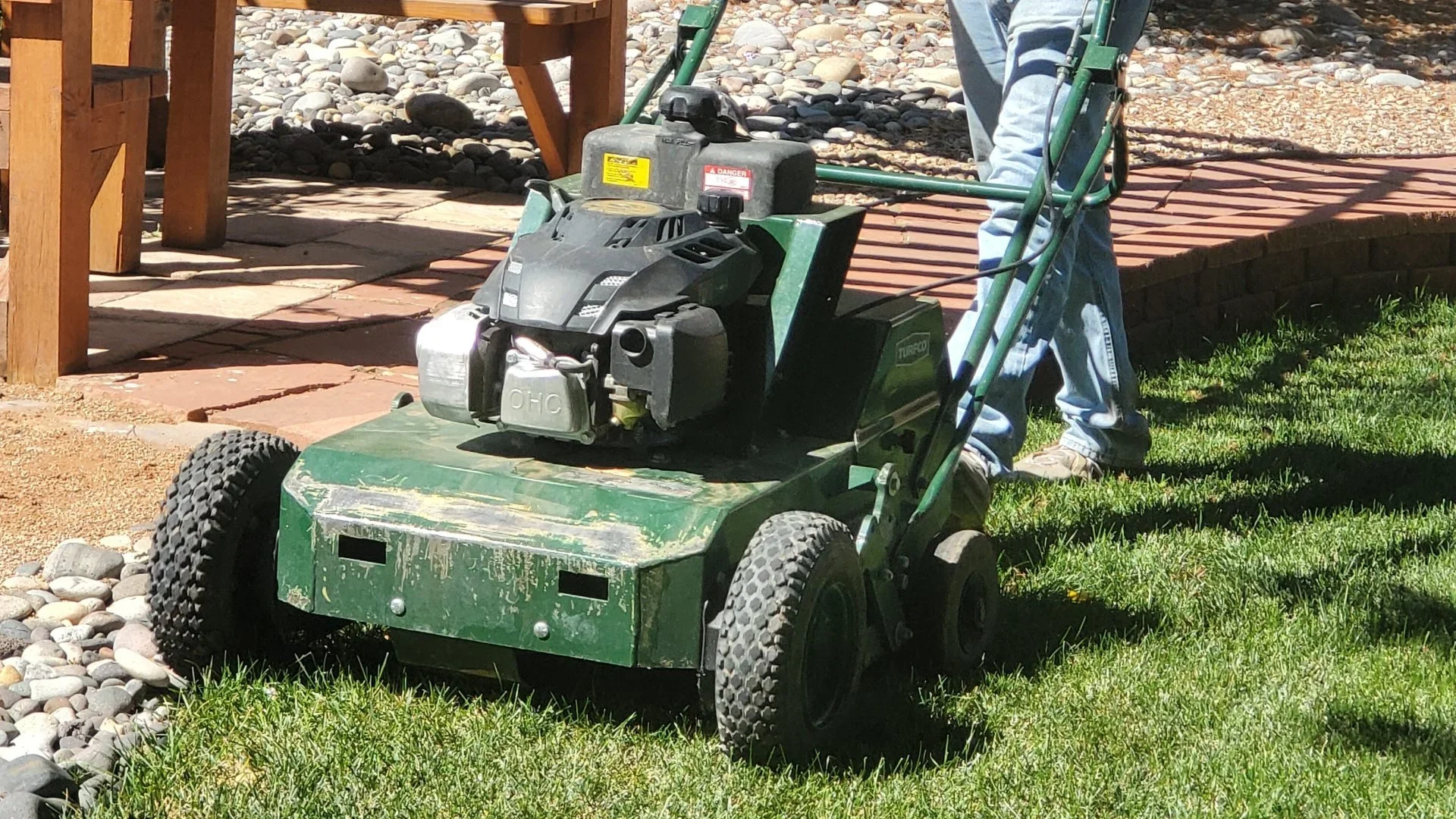
Probe resistance with a screwdriver after a soak. If the tool stops in the top two inches on the west apron only, aeration timing should pair with irrigation changes before another summer of afternoon fade.
Redlands drive aprons that bake beside garage doors often show this pattern while side yards on the same clock stay dense.
## Mow height and blade mass as summer shade
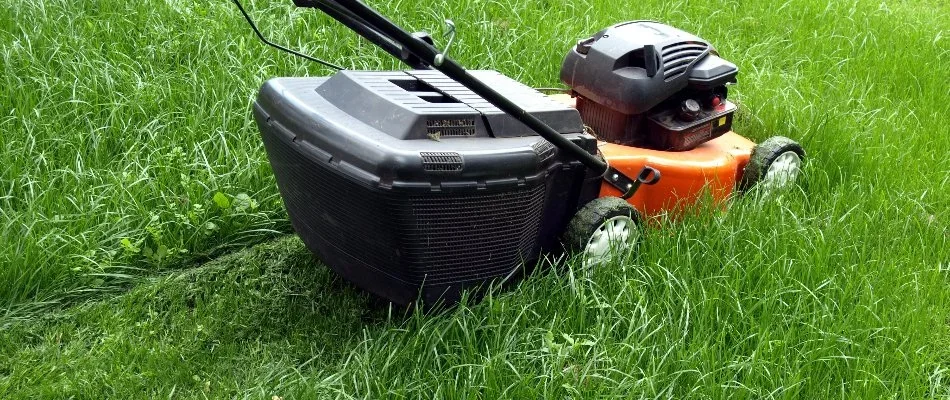
Scalped Kentucky bluegrass on west exposures has almost no blade tissue left to transpire slowly or shade the crown. Raising the deck before June heat arrives is cheaper than reseeding in September.
Track deck height on the same note as sprinkler audit dates. When both records sit on one sheet, afternoon decline stops looking like a mysterious disease year after year.
Lawn care visits that coordinate mowing with irrigation maps solve more west strips than an extra fungicide pass added late in July.
## What to send before a site read
Photograph the declining strip at mid-afternoon with a wide shot that includes pavement and west-side hardscape. Note last aeration, last fertilizer, and whether startup moved minutes up in April.
Mention neighborhood and exposure if the lot sits open toward the Bookcliffs or toward a west ridge. Contact with those photos lets Mesa Turf Masters separate heat stress from grub or billbug damage before product names appear on the ticket.
Close the file with one year of color notes if you have them. Afternoon sun decline is rarely random when the same band returns each August on Grand Junction clay.
## Year-to-year records on west strips
Save one west-exposure photo each August with the same stake in frame. Kentucky bluegrass decline that returns in the same band is easier to explain to the next owner when the file shows three seasons of color change.
Note deck height, startup minutes, and last aeration date beside the photo. Grand Junction afternoon sun stress rarely fixes itself when only one variable changes.
Mesa Turf Masters keeps those records on Grand Valley tickets so spring conversations start with geometry instead of guesses.
Bring the file to fall walkthroughs when you debate overseed versus patience on sun strips that still hold crowns.
* Disclaimer: This article is for general informational purposes only. It is not professional advice, a quote, or a service agreement. Conditions at your home or property may differ; contact a qualified professional for an on-site evaluation before making repair, safety, or spending decisions.