A dry winter leaves Grand Valley clay crusted at the surface long before buds break on ornamental trees. Startup in March is less about turning the clock on than about matching minutes to soil that resists shallow wetting. Mesa Turf Masters maps the lot before product names appear, because Grand Valley clay, afternoon sun, and shared irrigation zones change the first visit on every property.
## Dry winter clay does not drink on the first cycle
Low snow years leave Grand Valley clay hard at the surface while deeper soil still holds old moisture profiles from the previous fall. First startup cycles often wet the top inch and run off toward sidewalks before roots feel anything.
Walk the lot while zones run and mark dry ribbons beside curbs and foundation walks. Those maps belong on the same page as clock start times because startup is a coverage problem, not only a calendar problem.
Grand Junction HOAs that open clocks on a fixed April date without a coverage walk repeat crusted strips every dry spring.
## Minutes versus infiltration rate
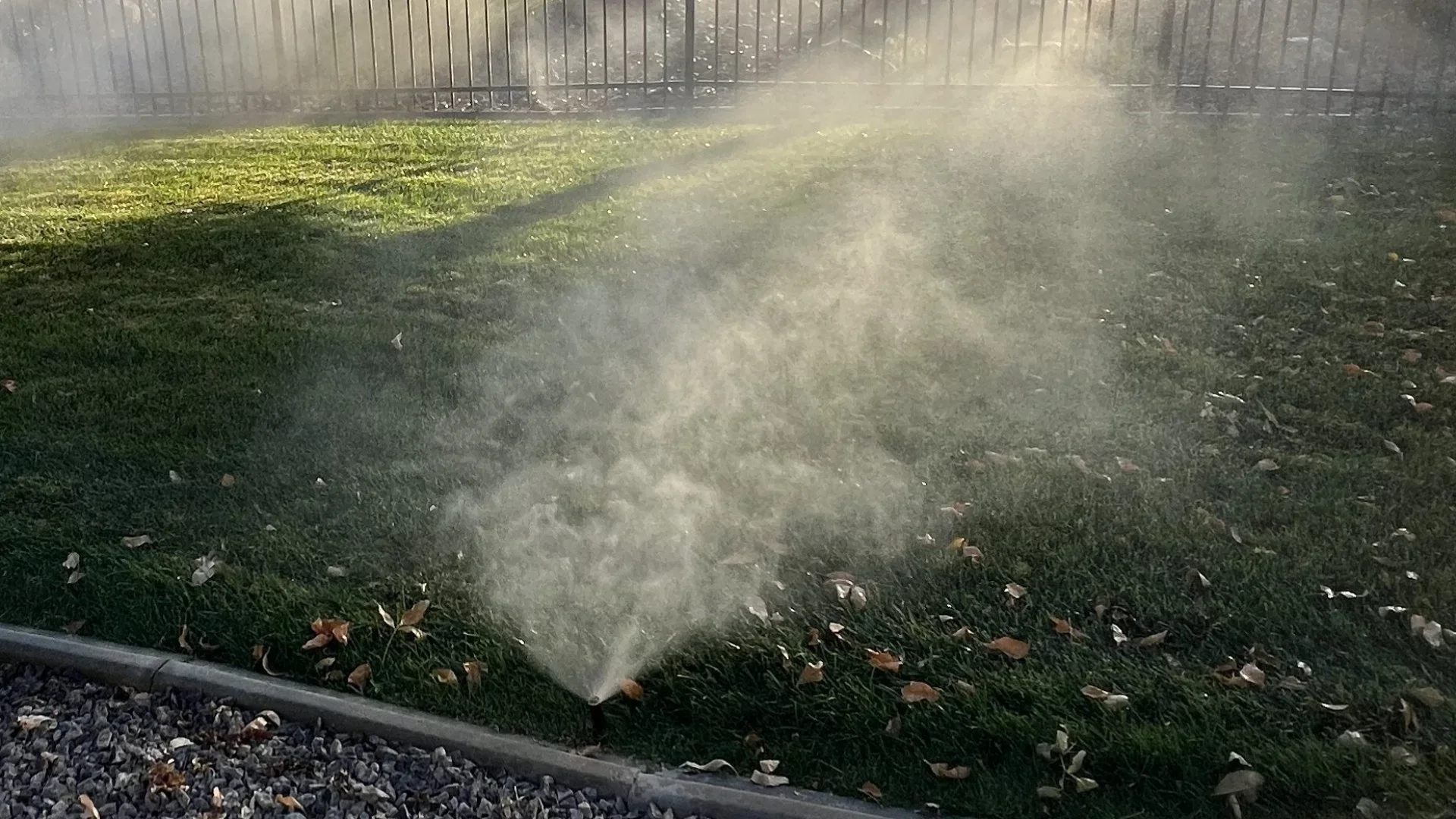
Increasing runtime without splitting cycles can flood low bowls while high corners stay dust-colored. Cycle-soak on clay means shorter passes with soak time in between, not one long surge that runs to the gutter.
Pressure changes when neighbors open systems the same week. End-of-line heads on long laterals may need nozzle changes after a dry winter when demand across the valley spiked overnight.
Record soil probe depth after each cycle during startup week. When the probe eases past four inches on most panels, you have a baseline for summer minutes instead of guessing from last July.
## Cold nights still matter in March and April
Startup too early on frozen dawn soil pushes surface wetting that chills crowns without helping roots. Wait for consistent thaw on top profiles, then begin with lighter passes before full summer minutes return.
Palisade and Orchard Mesa lots with frost pockets behind berms may need zone starts staggered even when downtown Grand Junction already greens.
Night-time shutoff that worked in winter may still be correct for a few weeks after startup while days warm faster than soil below two inches.
## Head alignment after winter damage
Plow edges, snow shovels, and mower strikes tilt heads toward beds or pavement every winter. A mis-aimed stream can miss the lawn entirely while overshooting xeric plants beside the walk.
Flag each head with a colored stake during the first audit pass. Replacement and riser straightening cost less than a summer of dry arcs traced back to a bent nozzle in April.
Park strips and corner heads take the most mechanical hits because that is where equipment turns on tight Fruita corners.
## Turf density before fertilizer season
Thirsty turf from poor startup invites weed breakthrough later, but dumping fertilizer on dry crowns does not fix coverage gaps. Green-up should follow even moisture, not precede it on clay.
Note thin panels separately on the startup sketch so fall overseed or spring thickening plans attach to real dry zones instead of the whole lot label.
Mesa Turf Masters often pairs startup correction with a density read before any feed discussion on western Colorado lawns.
## Closeout is a wetting map
Save photos of probe depth tests, head fixes, and zone run times after startup week. That file becomes the reference when July heat returns and someone asks why only one apron browns.
Contact with town, controller brand, and photos of dry ribbons speeds the first visit. Dry winter startup on clay is repeatable work when the map survives from spring to fall.
A wetting map worth keeping names each zone start date and whether cycle-soak was enabled, not only total weekly gallons.
## Spring follow-through after startup week
Re-walk dry ribbons two weeks after startup fixes. Clay that resisted first infiltration often accepts deeper wetting once surface crust is broken.
Compare probe depth on the same markers you flagged in April. Fruita and Grand Junction lots rarely need identical minutes by June if spring maps were honest.
Log whether cycle-soak stayed enabled through May. Turning it off too early can recreate the dry ribbons startup was meant to erase.
Send updated photos before fertilizer season so feed plans attach to real moisture, not to a controller screen alone.
* Disclaimer: This article is for general informational purposes only. It is not professional advice, a quote, or a service agreement. Conditions at your home or property may differ; contact a qualified professional for an on-site evaluation before making repair, safety, or spending decisions.