Park strip turf in Fruita and along Grand Junction parkways sees more salt, exhaust heat, and foot traffic than the interior rectangle ever does. Crabgrass breakthrough there is a map of edge conditions, not proof the whole program failed. Mesa Turf Masters maps the lot before product names appear, because Grand Valley clay, afternoon sun, and shared irrigation zones change the first visit on every property.
## Park strip soil is not backyard soil
Curbside turf sits in fill that contractors compacted, salted, and sometimes capped with rock fines before sod arrived. Crabgrass loves that thin, disturbed profile more than the deep rectangle behind the house.
Grand Junction park strips also catch radiator heat and irrigation overshoot from sidewalk heads set for the lawn center. Weed density maps there should ignore how green the backyard looks on the same program.
Fruita gravel shoulders beside strip turf hold even less water than clay interior panels, which changes which pre-emergent timing actually contacts germinating seed.
## Pre-emergent contact on thin turf
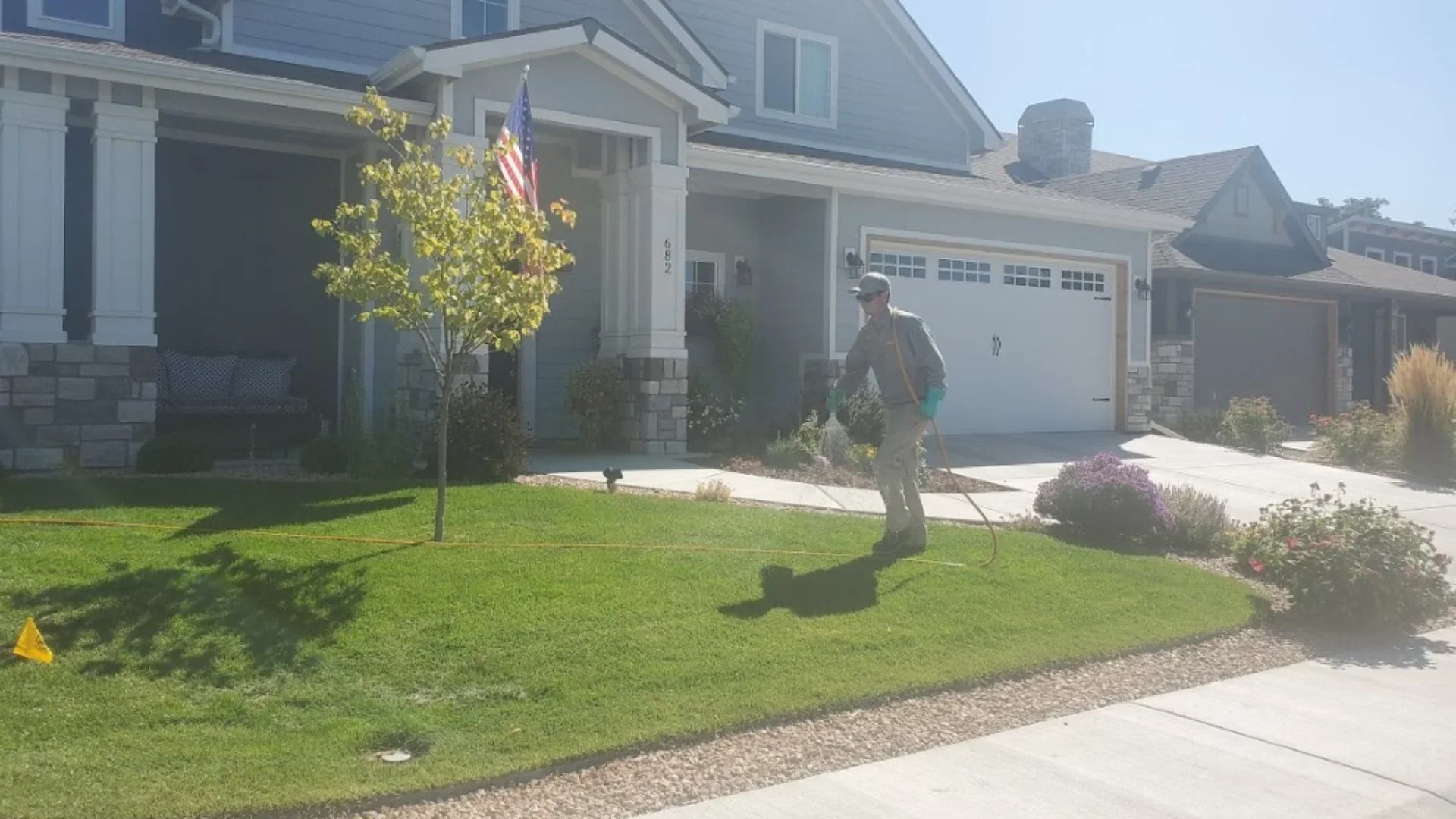
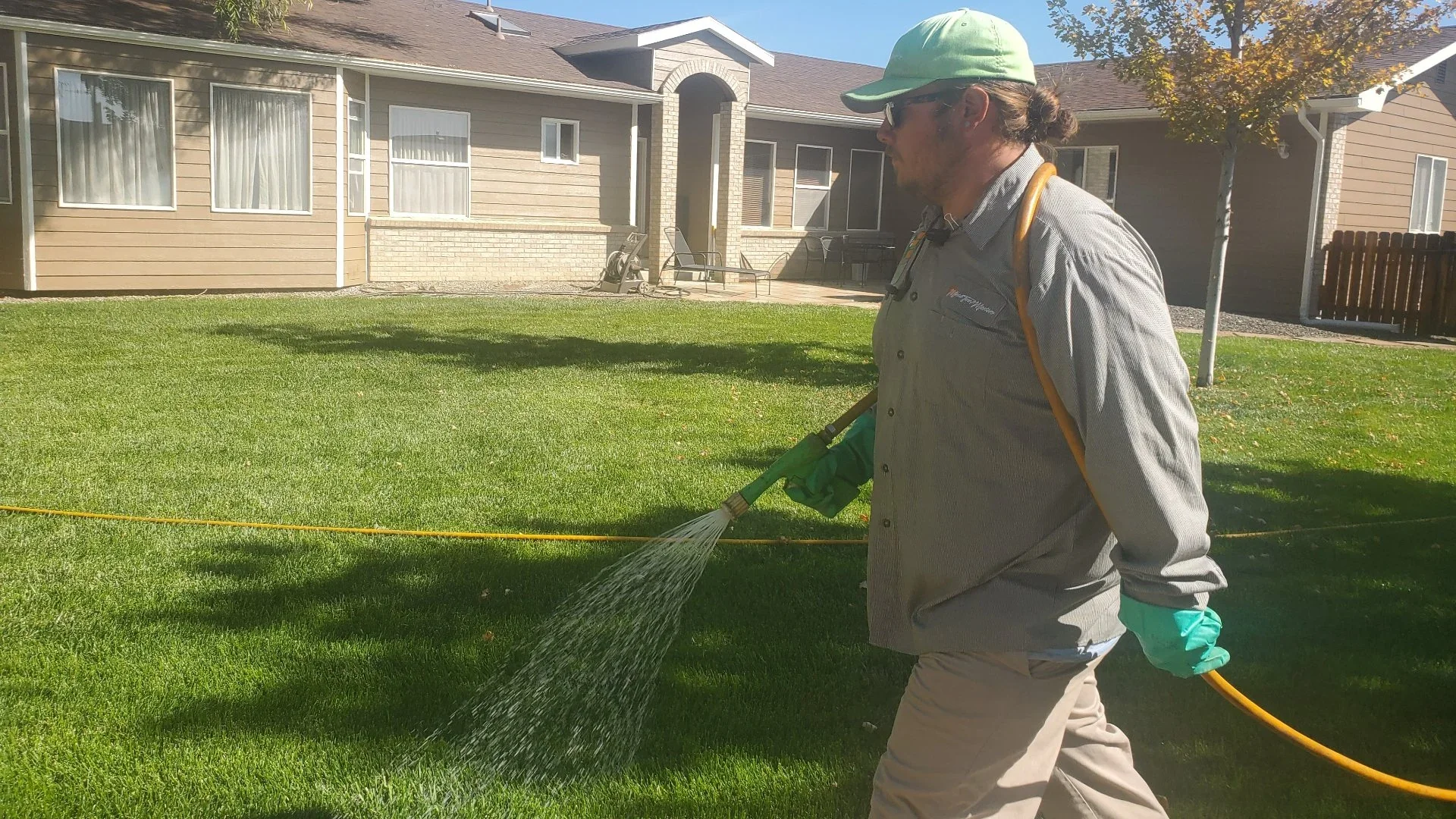
Barrier chemistry needs incorporation into the soil surface through water or light cultivation. On eroded strip edges where bluegrass is sparse, crabgrass breaks through because the product never sat in the zone that actually germinates weeds.
Note whether last season relied on blanket applications sized for the whole square footage. Strip-only areas may need split rates instead of sharing one bag rate with the interior lawn.
Late summer crabgrass that already set seed is a file for next spring, not a reason to blanket-spray heat-stressed turf in August on Grand Valley parkways.
## Salt and de-icing residue
Municipal salt and private ice melt move into strip soil with every melt cycle. Turf margins stay stressed while weeds that tolerate salt outcompete Kentucky bluegrass for the same inch of moisture.
Flush thinking belongs beside weed thinking on strips that touch pavement. Without naming salt stress, post-emergent work on crabgrass may only clear the symptom for a few weeks.
Photograph weed lines parallel to curb edge. That geometry often points to splash chemistry faster than a generic weed list ever does.
## Mowing and edge geometry
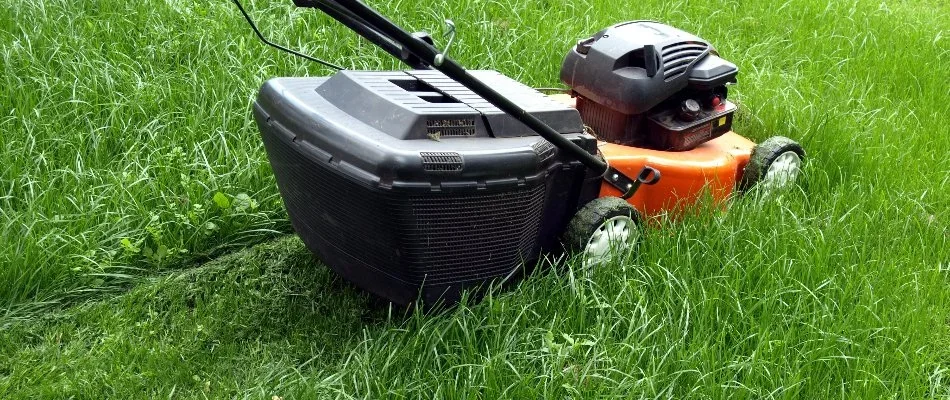
String trimmers scalped to sidewalk level remove the only blade tissue protecting strip crowns. Crabgrass fills scalped lines faster than bluegrass recovers on sun-baked curb soil.
Maintain a consistent mower line that leaves a soil shadow slightly inside the walk. The strip looks wider on paper but stays denser through July heat on Redlands and downtown strips alike.
Edge equipment that blows clippings into gutter lines also moves seed from weedy parking areas onto your strip every week.
## Thickening versus chemistry alone
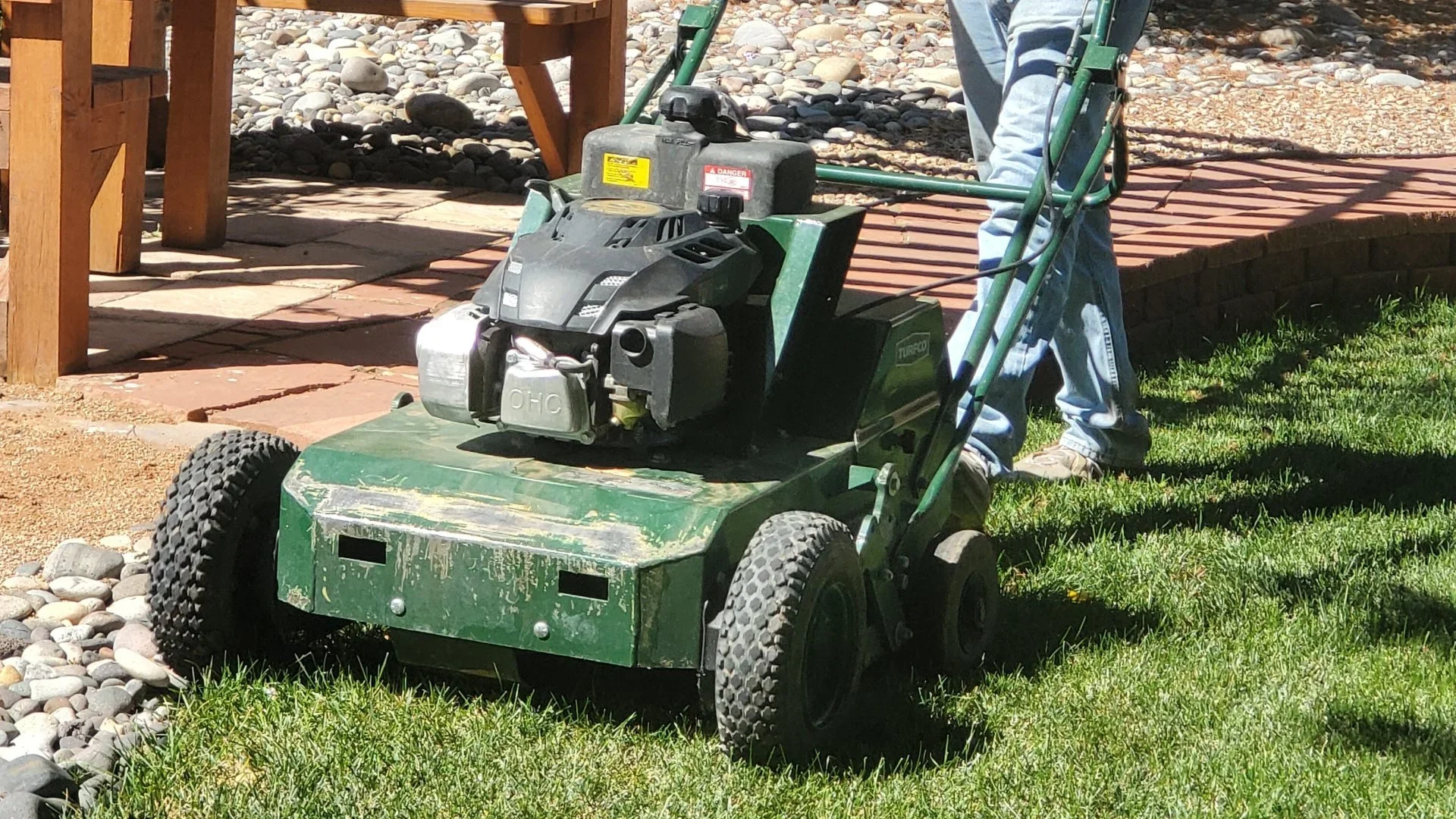
Seed or sod repair on strips may belong in the plan when pre-emergent timing was right but turf never competed. Chemistry without density often repeats the same breakthrough footprint.
Separate strip square footage from backyard square footage when ordering seed or topdressing so repair rates match real curb dimensions.
Lawn care that names strip panels on the ticket prevents treating a five-foot band like a forty-foot backyard zone.
## Season file for the strip
Sketch the strip length, exposure, and last pre-emergent date on one page before winter. Crabgrass maps that survive to March stop debates about whether the whole yard failed.
Send strip photos with breakthrough plants still present if possible. Seed heads in the frame tell Mesa Turf Masters which calendar window to adjust on Fruita and Grand Junction parkways.
Contact with town and whether HOA or city maintains adjacent sidewalk icing closes the loop before spring product orders go in.
## Spring pre-emergent on the strip only
Size strip product separately from backyard square footage when ordering pre-emergent. The park band often needs contact timing a week earlier than the interior lawn because soil warms faster beside pavement.
Note whether city or HOA salts the walk beside your strip. Salt stress maps belong on the spring weed ticket beside product rate notes.
Photograph strip width with a tape measure in frame if the HOA disputes who maintains edging. Crabgrass breakthrough debates shorten when the maintained band is defined.
Keep one strip-only map each year even when interior turf looks perfect by midsummer.
* Disclaimer: This article is for general informational purposes only. It is not professional advice, a quote, or a service agreement. Conditions at your home or property may differ; contact a qualified professional for an on-site evaluation before making repair, safety, or spending decisions.